A six-month paid fellowship inside a government department, working alongside government partners, solving tasks for real-world impact.
We aim to identify and train early-career public-interest technologists who can strengthen, modernise and humanise the digital systems solving India's most urgent public and governance challenges.
01
Before you start, an orientation in public service, policy and what it takes to put technology inside complex social systems. You hear from some of India’s top technologists, policymakers, designers and administrators. Much of it is tacit knowledge you won’t find anywhere else, there to ready you for the six months ahead.
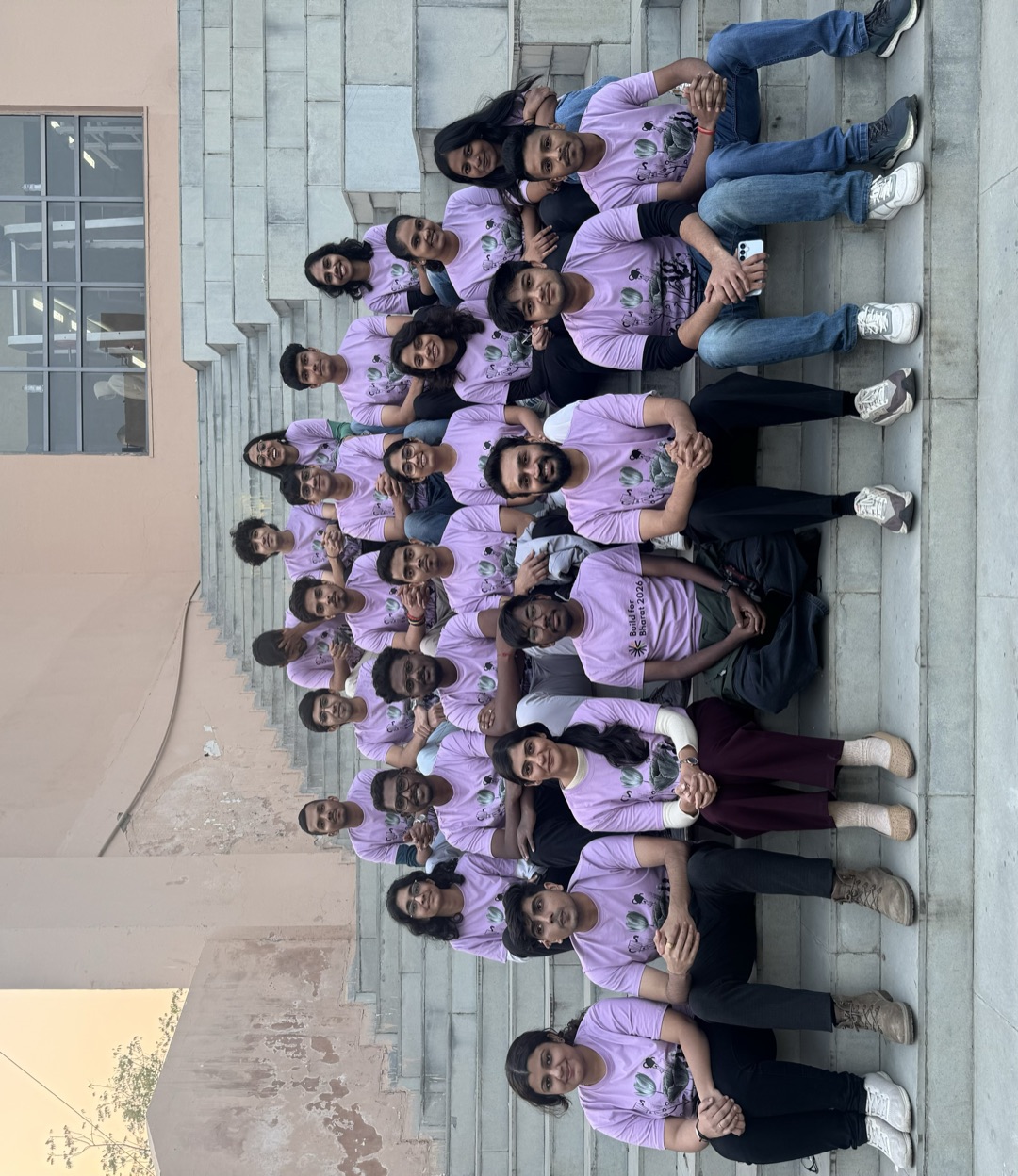
Watch last year’s orientation ↗The 2026 cohort
02
Once deputed to a government team, you work alongside the people already there, on real problems and real codebases. Most fellows ship changes to government systems within their first month, and a few go on to redesign or launch services used by millions of Indians. This is the real thing, not a hackathon or a side-project.
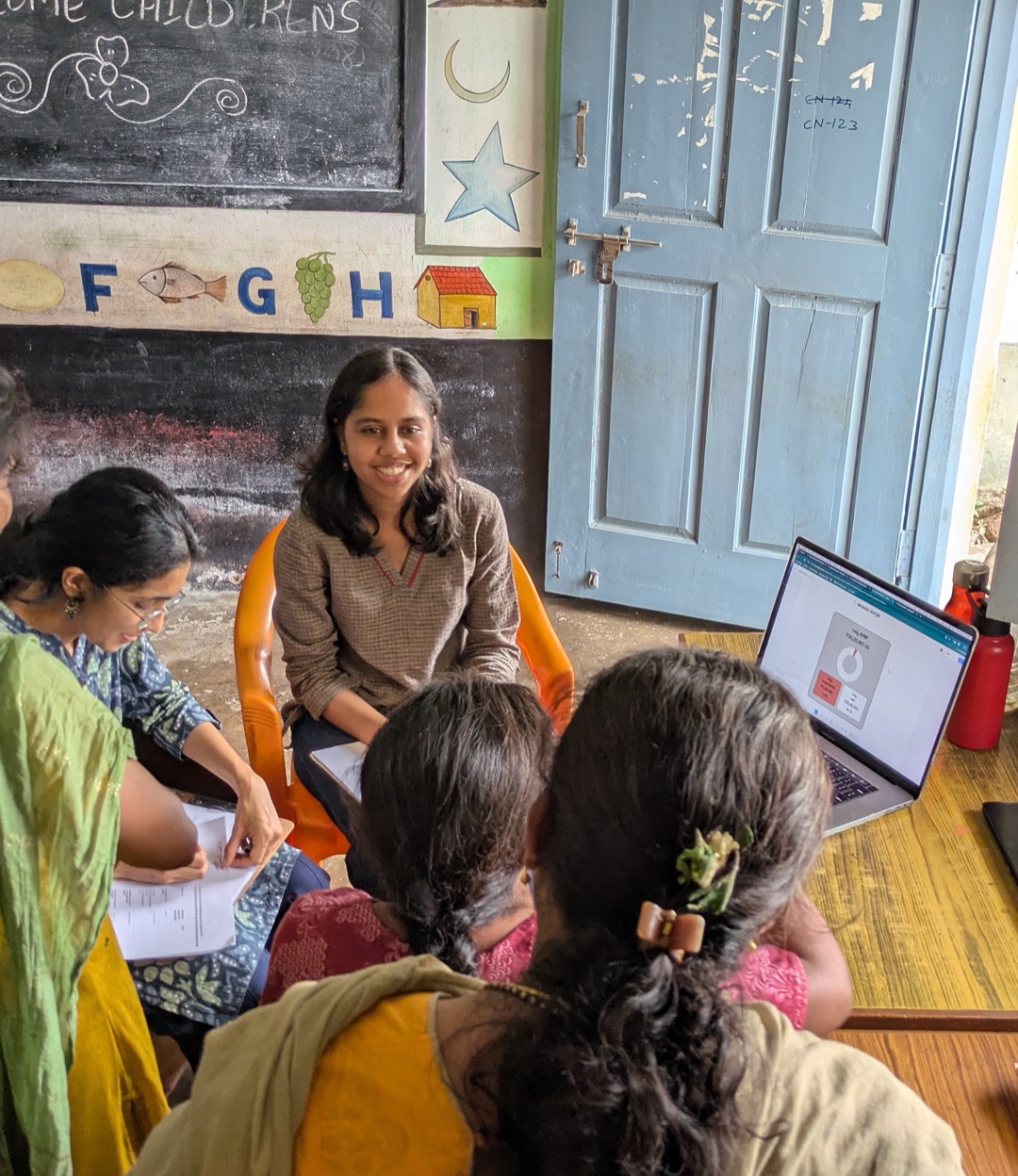
A session with an anganwadi group · RDPR Karnataka
03
Throughout the fellowship, you have regular mentoring and check-ins with Bharat Digital’s core team. On top of that, you get office hours with some of India’s leading public-spirited technologists and designers. Previous mentors include Kailash Nadh (CTO, Zerodha), Rukmini S (Data for India; author of Whole Numbers and Half Truths) and Devanshi Sihare (Head of Social Impact, TinkerLabs).
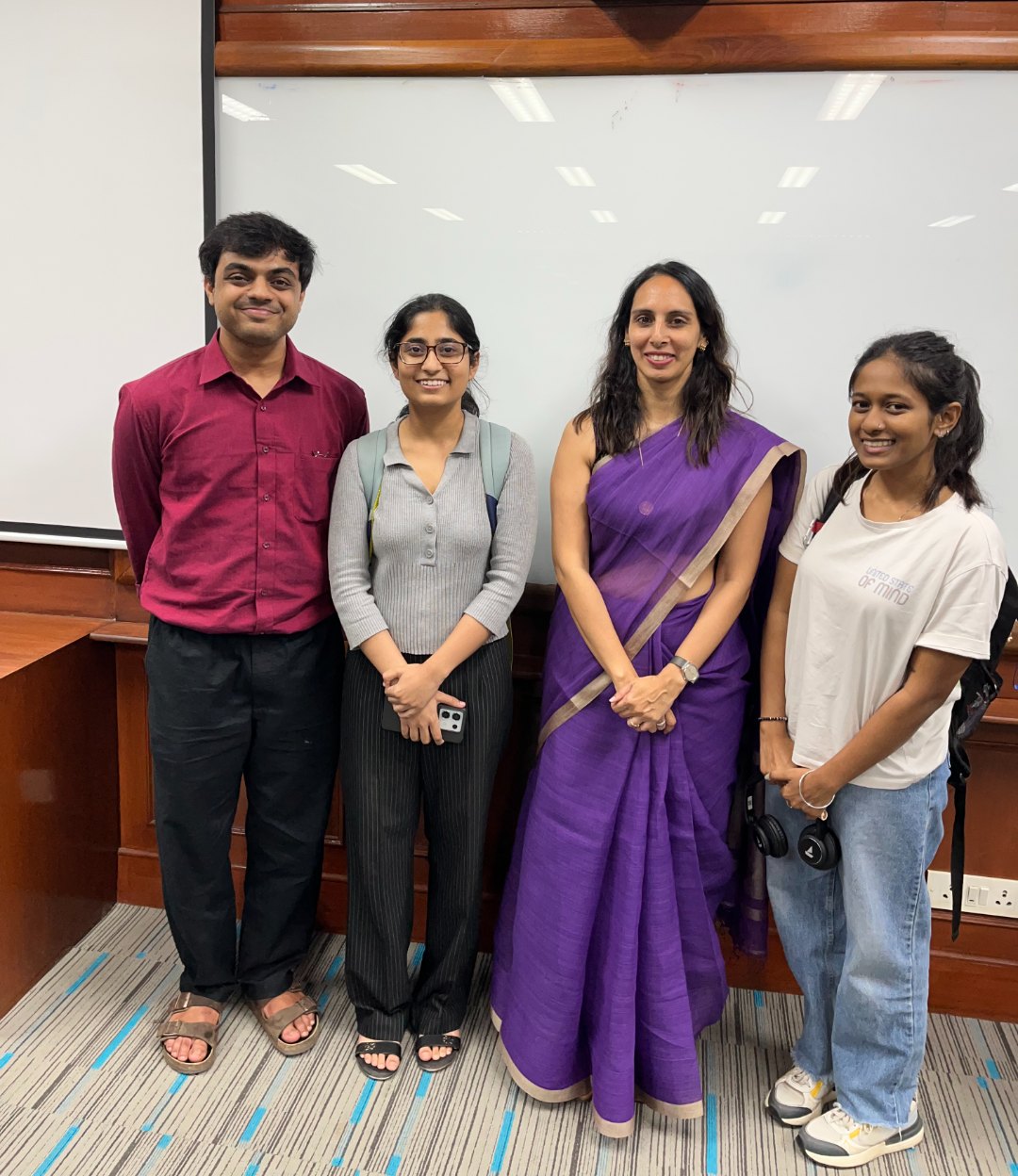
Fellows with mentor Rukmini S · Data for India
04
Field visits are an integral part of the fellowship. Not a line of code gets changed until you’ve understood the problem first-hand: visited the offices and rooms where your technology will be used, and met the people it will affect. By the end, you won’t just have immersed yourself in India’s grassroots; you’ll understand how public systems are actually conceived, and how they touch the ground.
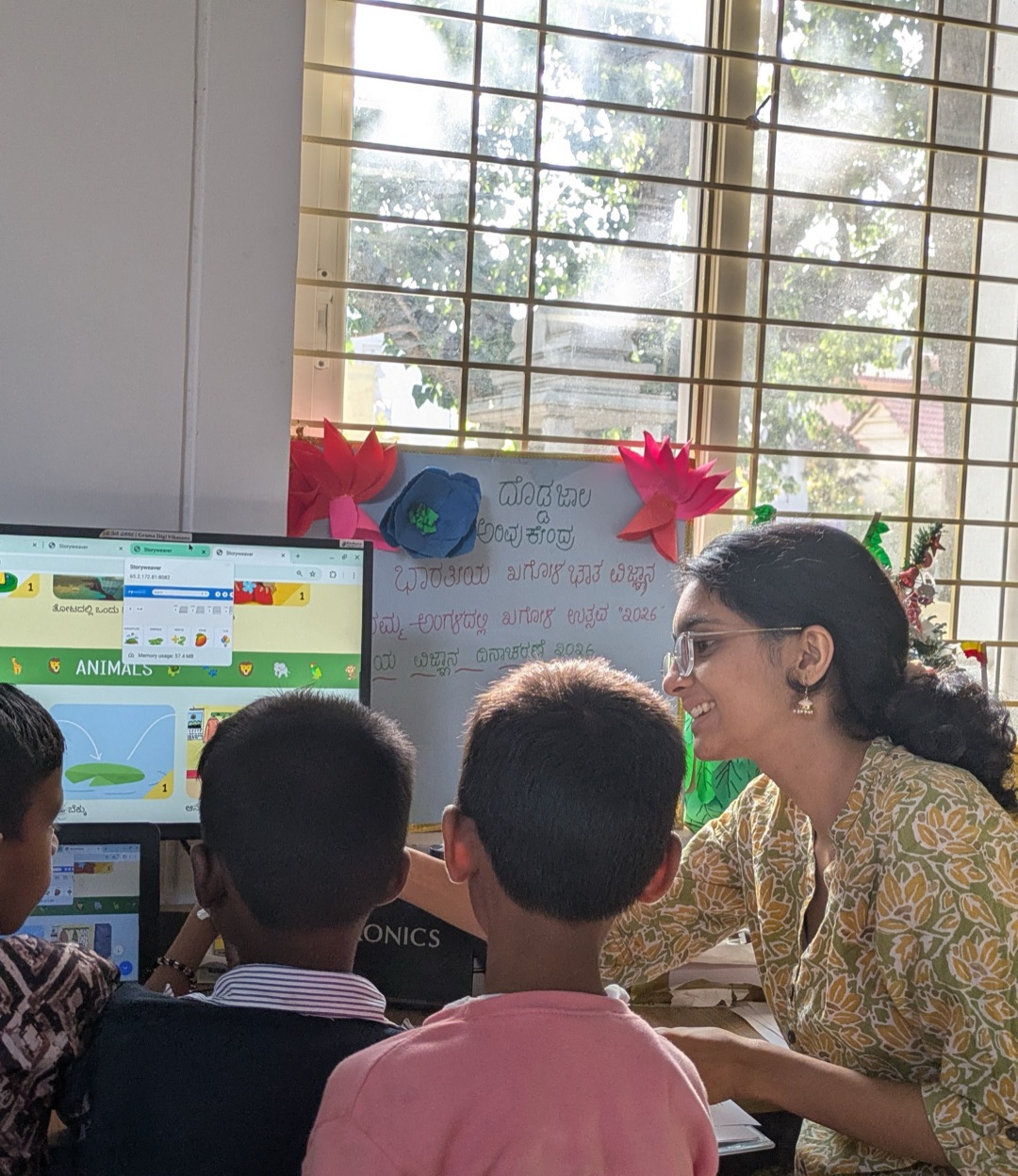
StoryWeaver Lite with children in a Gram Panchayat library · RDPR Karnataka
05
We believe deeply in the power of community. We create opportunities for fellows to get to know one another across cohorts, and to plug into the wider public-technology ecosystem through events, talks and one-on-one sessions with founders and practitioners.
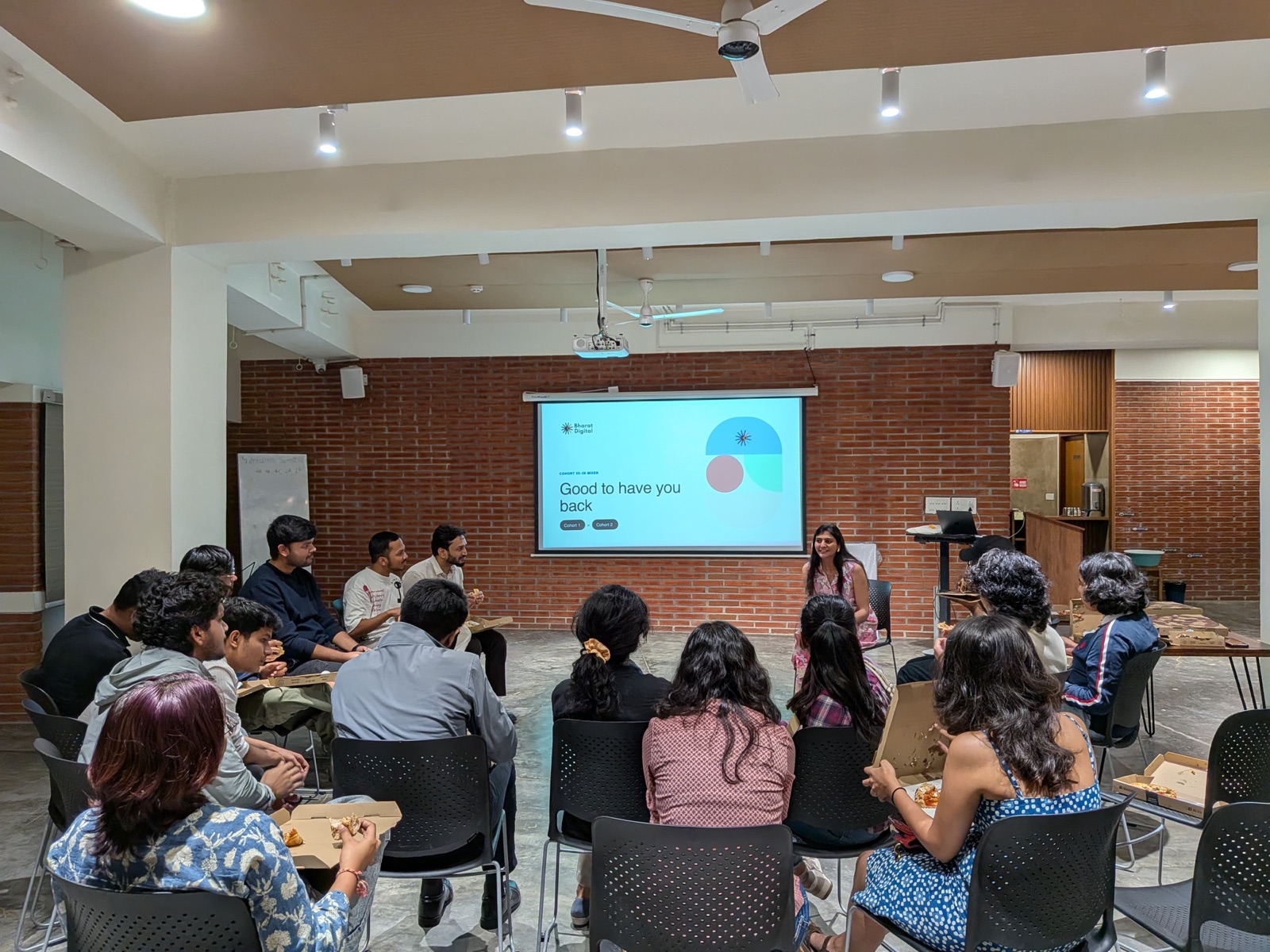
A mixer for the 2025 and 2026 cohorts
06
Six months inside a department changes what you can do next, and often what you want to do next. We work closely with you to find that next step, so you can keep building in the public-technology ecosystem: in government, in research labs, or at the leading tech-for-good organisations using technology to improve public systems.
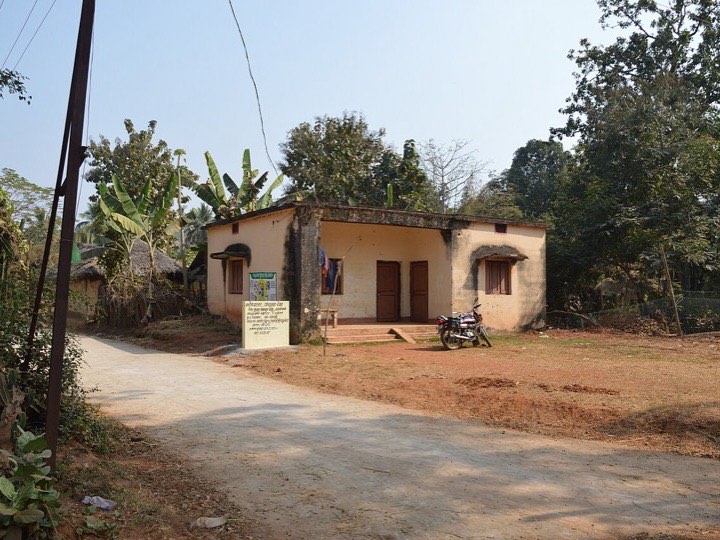
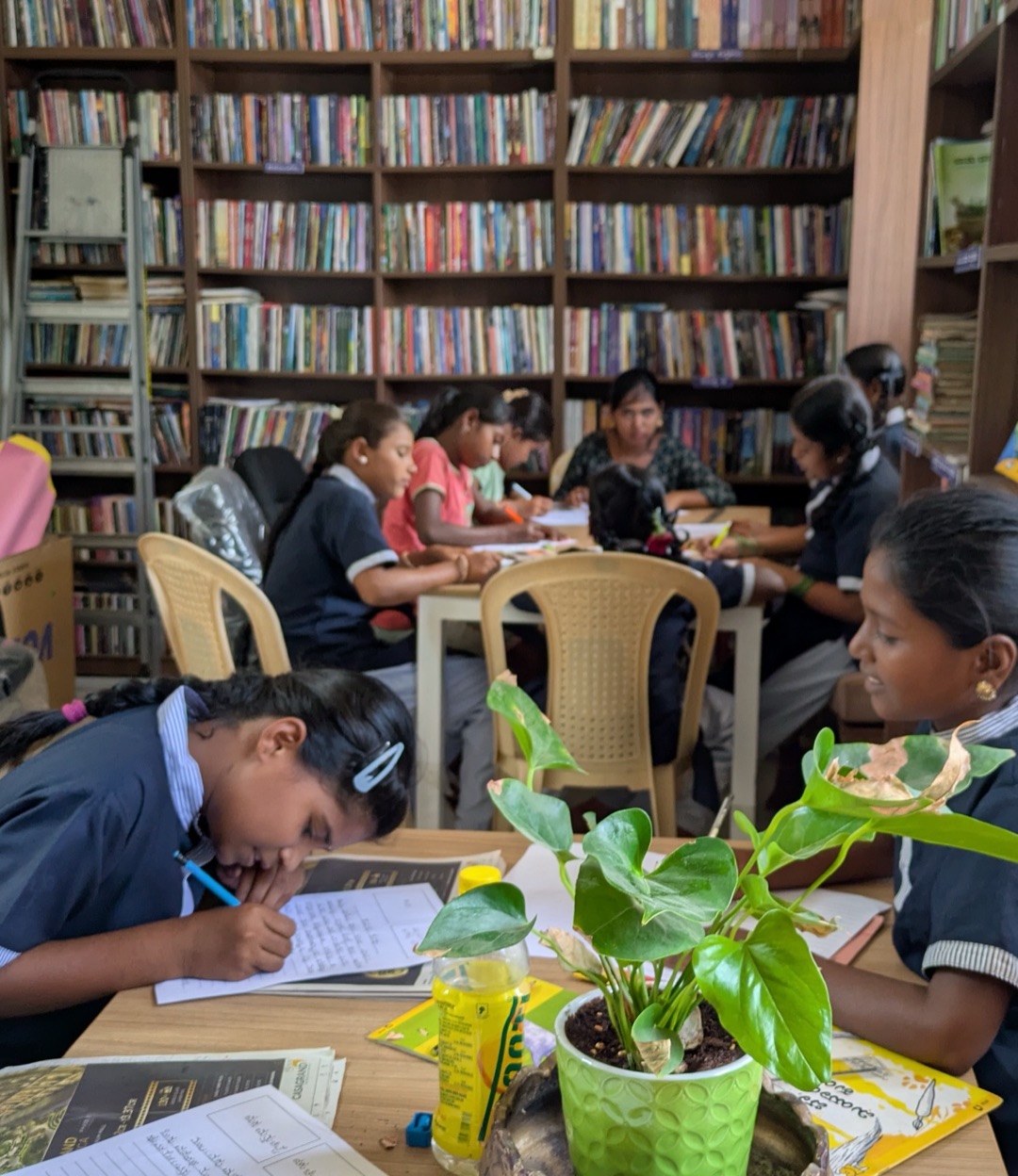
A Gram Panchayat library in Karnataka
See what fellows from the 2025 and 2026 batches shipped to improve real public systems.
Where fellows go
More than 80% of our 2026 cohort are now working in government or the wider public technology sector.



To identify and train early-career public-interest technologists who can strengthen, modernise and humanise the digital systems solving India's most urgent public and governance challenges.
A new set every year. Each cohort is placed with a fresh group of departments, so the list changes with every intake. For a sense of who we have worked with, look through the past projects — each one names the department the fellow was placed in.
Three tracks: Design, Artificial Intelligence and Engineering. Each has its own application form — pick yours in the tracks section above.
Students and early-career professionals — those who graduated in 2024, 2025 or 2026, or who graduate in 2027 — with demonstrable skills in Design (UI / UX / User Research), Artificial Intelligence, or Engineering.
There is a specialised form for each track. Choose your track and fill in the form accordingly, before the deadline.
Six months, starting in January.
A curated and rigorous orientation programme covering the realities of public service, policy, and the challenges of implementing technology within complex social frameworks.
Across India, and not fixed. Placements follow the departments, so locations are not announced ahead of selection; you learn yours at orientation. Past cohorts have been in Delhi, Bengaluru, Thiruvananthapuram and Chennai, and the past projects show where each department sat.
No. Departments are assigned to fellows by Bharat Digital, matched to the track you applied on and to what each department needs that year.
Yes. Fellows receive a stipend of ₹40,000 a month for the six months. You’ll be on the payroll of Bharat Digital.
High-impact technology projects inside a partner department — work that either improves the lives of millions or makes government operations measurably more effective.
Yes. The fellowship is high-touch. Every fellow has a champion inside their government department, regular check-ins and guidance from Bharat Digital’s core team, and online office hours with experts in databases, security, distributed systems, open-source technology and design, drawn from top tech companies, academia and the public sector.
Yes. The fellowship is open to Indian citizens only.
No. We are a non-government organisation that runs the fellowship in partnership with select government departments.